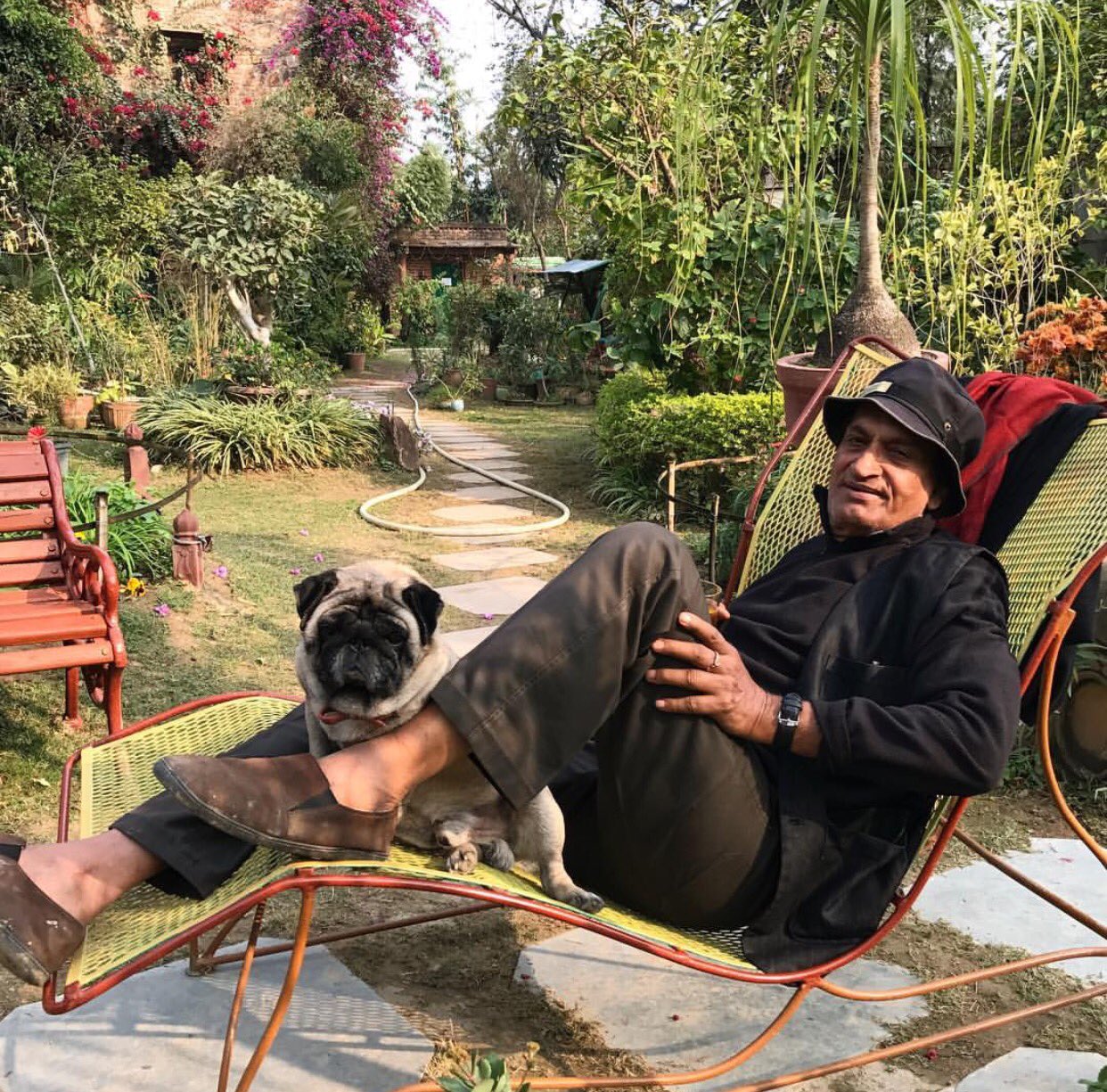
Raghu Rai, one of India’s most storied and influential photojournalists, passed away on 26 April 2026 in New Delhi at the age of 83, after a prolonged battle with lymphoma. His death marks the end of an epoch in Indian visual journalism, closing a career that spanned more than five decades and redefined how the world has come to “see” modern India…
A life shaped by light and history
Born in 1942 in Jhelum , now in Pakistan , Raghu Rai trained as a civil engineer before turning decisively to photography at the age of 23. In 1966 he joined The Statesman in New Delhi, where he quickly became one of its chief photographers, honing a style that fused technical precision with an almost painterly sense of light and composition. His early mentors included the legendaryHenri Cartier‑Bresson, who later invited him to join Magnum Photos in 1977, catapulting him onto the global stage…
Rai’s work from the 1970s onward became inseparable from the political and human drama of modern India. As picture editor with India Today from 1982 to 1992, he not only shaped the visual tone of one of India’s leading news magazines but also helped institutionalize photojournalism as a serious, independent discipline in the country. His images regularly appeared in Time, Life, The New York Times, The Independent, and The New Yorker, making him a rare Indian voice in the world of international photojournalism…
Lense of Power with Pain
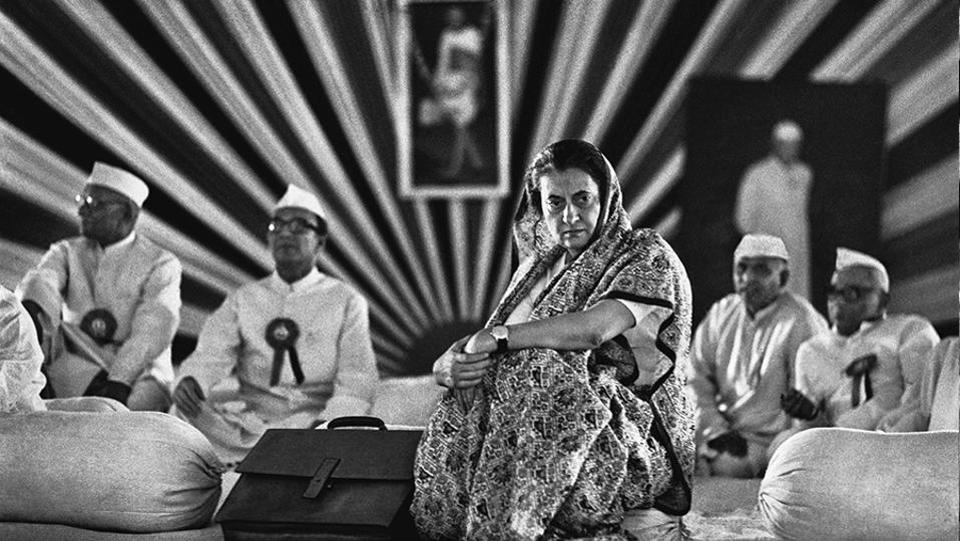
- Few photographers have had such direct access to power, yet maintained such a critical distance from it. Raghu Rai’s portraits of Indira Gandhi stand out as a masterclass in political portraitur . at once intimate and unflinching, capturing her authority, vulnerability & the quiet melancholy that often accompanied it. His lens followed her from the assertive years of the 1971 Bangladesh war to the darker phase of the Emergency, documenting the evolution of India’s political culture through the face of its most powerful leader..
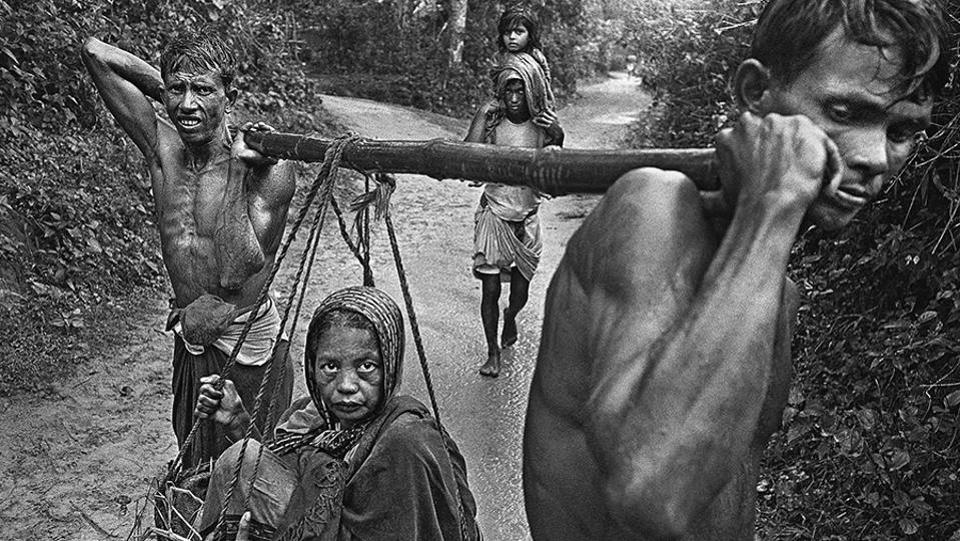
2) Equally haunting are his images of human suffering. His coverage of the 1971 East Pakistan/Bangladesh refugee crisis, the 1972 Bihar floods, and the 1984 Bhopal gas tragedy transformed these events into visceral, global testimonies. In Bhopal, his photographs of dead children, weeping widows & ruined streets forced the world to confront the scale of industrial negligence and state failure in a way that words alone could not. His work became a moral compass , as a reminder that a photograph is not merely a record, but a verdict on power when it fails its people..
reprsented Visual Language of India for Indian
- Raghu Rai built a vast archive of Indian life that is arguably as important as his reportage. Over the years, he produced more than 18 photobooks that explored cities, faiths & cultures likeRaghu Rai’s Delhi, Calcutta, Khajuraho, Taj Mahal, The Sikhs, Tibet in Exile & Mother Teresa among them. These projects were not tourist glances , they were extended meditations on how light, ritual & everyday routines compose the soul of a place..
- His photographs of Mother Teresa, for instance, are notable for their quiet dignity & absence of hagiography. They show compassion not as a halo, but as a daily, physical labour carried out in crowded alleys and dimly lit rooms.
- Similarly, his portraits of Dalits, the poor & the displaced refuse to reduce human beings into symbols of suffering; instead, they insist on individuality, resilience, and an irreducible inner life. In doing so, Rai quietly expanded the grammar of Indian documentary photography, insisting that the “ordinary” is as historically significant as the spectacular…
- Raghu Rai’s influence extended beyond the darkroom and gallery walls. He was a mentor to generations of photographers and journalists, often described as generous yet exacting, combining brutal critiques with open armed encouragement.
- He also lent his voice to the broader public‑intellectual conversation, writing and speaking about the ethics of seeing, the politics of representation & the role of the camera in a democracy. For him, photography was not a neutral act , it was a symbolic and technical intervention that either reinforced or challenged existing hierarchies of power and visibility. His insistence on grace, humility, and responsibility in the framing of human subjects offered a much‑needed counterpoint to the increasingly sensational and viral logic of contemporary image culture…
- Rai’s passing coincides with an era in which India is awash with images but curiously short on visual memory. Social‑media feeds overflow with staged selfies, curated glamour & algorithm driven outrage, while the hard, patient work of bearing witness of standing in the rain, in the dust, in the silence left by tragedy has become rare. his life and work pose a quiet but urgent question that is can a democracy survive without the patient, unflinching eye of the photographer witness ?
- The answer lies scattered across his frames , in the gaze of a refugee child, the hands of a nurse in Bhopal, the quiet stillness of Indira Gandhi moments before a press conference, and the fragile beauty of a Delhi winter sunrise over the Yamuna. These images are not relics , they are living contracts between the photographer and the viewer, between the past and the future. By insisting on proximity, intimacy, and emotional honesty, Raghu Raidid not simply document India , he helped shape how Indians imagine themselves in their own history..
” Raghu Rai’s death is not just a loss of a great photographer, it is the closing of a chapter in India’s visual and civic imagination. His photographs will outlive the ephemeral controversies of the present, serving as a steady point of orientation for anyone who wants to understand how India has lived, suffered, and hoped in the second half of the twentieth century and beyond. As the nation reflects on his life, it should also reflect on the broader conditions that can either nurture or erode such a vocation editorial independence, access to the field, and the willingness of institutions and audiences to tolerate discomfort in the images they consume, India is not only honouring a legendary lens but also re‑affirming a simple, profound truth , that a society that stops looking at itself honestly cannot claim to be free “
Disclaimer : all pic taken from X account of Late shree Raghu rai ji
To Read more person in news visit the link and to know our vision visit here
Join TEN Today
Follow us on Instagram, YouTube, X , telegram , Linkedin , Arattai a & Kubza for daily updates.
We are deeply aligned with our Tagline that is “Empowering Wisdom” , One verified story at a time.
I believe you love to Visit and Subscribe at given above Link for Better Version of Current affairs News at www.eminentnews.com /www.eminentnews.in , please join us to Learn, Leap and Lead in Life with mutual trust and coordination ..
Thank you !!!